Miami, FL – September 3, 2025 — The City of Miami’s Economic Innovation &...




Miami, FL – September 3, 2025 — The City of Miami’s Economic Innovation &...

On May 28, 2025, the City of Miami and citizenM hosted a Tech Mixer. It was...

On May 7, 2025, the Opportunity Zones Policy Summit convened at the National...
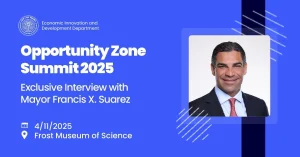
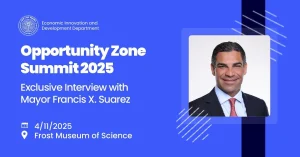
Miami’s Opportunity Zones have been key to the city’s growth since 2017. They offer tax incentives under the Tax Cuts and Jobs Act to spur investment in underserved areas. Mayor Francis Suarez, in office since that year, has seen these zones boost economic development and community revitalization. A Miami native and former real estate attorney, Suarez brings a practical perspective to balancing investor appeal with local needs like affordable housing and small business support.
We sat down with him to explore how the Opportunity Zones in Miami have evolved, their economic impact, and their future role in fostering equitable prosperity.
Mr. Suarez, Since taking office in 2017, how have the Opportunity Zones evolved as economic and community assets?
Suarez: “Miami’s Opportunity Zones, established under the 2017 Tax Cuts and Jobs Act, have significantly boosted economic development and community revitalization. These zones offer tax incentives for investors, including deferred or reduced capital gains taxes for long-term investments of at least 10 years. The program also prioritizes affordable housing and small business support. Developments in neighborhoods like Allapattah and the Omni area have added hundreds of affordable housing units, addressing those needs. Additionally, initiatives such as grants and low-interest loans are helping small businesses thrive within these zones. Opportunity Zones aim to revitalize economically distressed areas with median incomes ranging from $16,000 to $55,000, focusing on reducing poverty, improving infrastructure, and fostering inclusive growth. They’ve become vital economic engines for the city—attracting national and global investors while addressing community needs through targeted strategies. We are committed to ensuring equitable outcomes for everyone involved.”
“Miami’s Opportunity Zones have been a game-changer for our city, driving economic growth while improving living standards for residents. First, in terms of economic growth, these zones have attracted significant investments. From April to September 2021 alone, property sales in Miami’s Opportunity Zones totalled $942 million—a 25% increase compared to 2017. On the community side, we’ve made major strides in affordable housing. Two landmark projects—one in Allapattah and another near the Omni area—brought hundreds of affordable housing units to neighborhoods that desperately needed them. Another example is UNI Tower in the Arts & Entertainment District, which received $61 million in financing to develop 252 affordable and workforce housing units. These projects directly address our housing affordability while creating vibrant communities. We’ve also prioritized small business growth within these zones. Through grants, low-interest loans, and mentoring programs, we’ve supported entrepreneurs and local businesses, ensuring they have the resources to thrive. These initiatives not only create jobs but also foster innovation and economic sustainability. While there are challenges, such as mitigating displacement risks due to rising property values, Opportunity Zones remain a powerful tool for equitable development. By aligning investments with community needs, we’re building a future where all Miamians can share in the prosperity these zones bring.”
On April 11, we will see you on stage together with HUD Secretary Scott Turner at the Opportunity Zone Summit. What can the audience expect to hear?
“This event is going to be a pivotal moment for Miami’s Opportunity Zones. Secretary Turner and I will kick things off with a fireside chat where we’ll discuss how Opportunity Zones have been driving economic growth both locally and nationally. We’ll share insights on how Miami has positioned itself as ‘The Capital of Capital,’ attracting venture capital, technology firms, and institutional investors to fuel development in these zones, while Secretary Turner brings a wealth of federal expertise. His perspective will help attendees understand federal resources, policy updates, and how these initiatives can create transformational change in underserved communities and create sustainable growth. The summit will also feature panels on public-private partnerships, capital access, and legislative updates. There’s a strong focus on community-driven economic development—how we can ensure these investments benefit residents directly. Attendees will also hear about structuring qualified opportunity funds, leveraging investments, and integrating CRA-backed financing to support both real estate and business development. Miami is setting a national example for urban revitalization through Opportunity Zones. By combining federal incentives with local strategies, we’re creating thriving centers for innovation, commerce, and sustainable community growth. It’s a chance to connect with investors, developers, policymakers, and community leaders who share the vision of building thriving, inclusive communities. I’m excited to share Miami’s success story and collaborate on ideas that will propel us into the next chapter of growth.”
With the new administration’s strong support for Opportunity Zones, how do you envision their future in Miami as the program nears its 2026 sunset provisions? What strategies is your administration developing to sustain their economic benefits long-term, and will you push for federal extension or reform to bolster these efforts?
“Opportunity Zones have been transformative for Miami, and I believe their impact can continue well beyond 2026. As the program nears its sunset, my administration is focused on strategies to sustain their benefits long-term. We’re working on initiatives to expand access to capital for developers and entrepreneurs, strengthen public-private partnerships—especially with Community Redevelopment Agencies (CRAs)—and enhance infrastructure within these zones to attract next-generation industries like tech and finance. By aligning Opportunity Zone projects with CRA resources, we can create sustainable and inclusive growth. For example, combining CRA-backed financing with Opportunity Zone tax benefits has already helped build affordable housing and revitalize underserved neighbourhoods. Additionally, we’re prioritizing workforce development programs to ensure Miami residents directly benefit from these investments. By fostering innovation hubs and supporting small businesses in these zones, we’re laying the groundwork for long-term prosperity that extends beyond the program’s timeline. Extending the program is critical to maximizing its potential. I support proposals like the Opportunity Zones Transparency, Extension, and Improvement Act, which would extend the tax deferral period to 2028 while increasing transparency and targeting truly impoverished areas. Reforming the program to allow investments beyond just capital gains could also unlock more funding opportunities. These changes would ensure that Opportunity Zones remain a powerful tool for economic growth and community development—not just in Miami but nationwide. My ultimate goal is to position Miami as a model for equitable economic development through Opportunity Zones. By combining federal incentives with local strategies, we can create thriving centers for innovation, commerce, and sustainable growth—ensuring that prosperity is shared across all communities. Even as we approach 2026, I’m confident that with the right policies and partnerships, Miami’s Opportunity Zones will continue driving transformative change for decades to come.”
Mr. Suarez, Can you highlight some of the most impactful initiatives your administration has implemented in Miami’s Opportunity Zones over the past seven years?
“Suarez: My administration has implemented several impactful initiatives in Miami’s Opportunity Zones that have transformed them into engines of economic growth and community revitalization. First and foremost, we’ve made significant progress in affordable housing development. Two major projects in Allapattah and near the Omni area have added hundreds of affordable housing units to neighborhoods that have been the beneficiaries of this initiative. On the economic side, real estate investments have surged. Areas like the Arts & Entertainment District have seen remarkable growth, with high-density zoning projects attracting national and global investors. For example, a previously unsold vacant lot in the Arts & Entertainment District sold for $6 million after gaining Opportunity Zone designation, highlighting how these zones are unlocking new opportunities. We’ve also focused on supporting small businesses and entrepreneurs. Through programs like STRIVE305 and partnerships with organizations like Axis Helps Miami, we’ve provided grants, low-interest loans, and mentoring resources to help local businesses thrive within Opportunity Zones. These initiatives have empowered entrepreneurs to expand their operations and create sustainable jobs for Miami residents. Finally, we’ve prioritized workforce development to ensure residents benefit directly from these investments. Collaborations with institutions like Miami-Dade College have enabled programs like LevelUp Miami, which awarded scholarships and facilitated internships that led to full-time employment for hundreds of students. These initiatives demonstrate how we’ve leveraged Opportunity Zones not just as investment tools but as catalysts for equitable development. By combining federal incentives with local strategies, we’ve created vibrant communities where residents can live, work, and thrive. Looking ahead, we remain committed to sustaining these benefits long-term while advocating for federal extensions or reforms to maximize their impact.”