Miami, FL – September 3, 2025 — The City of Miami’s Economic Innovation &...




Miami, FL – September 3, 2025 — The City of Miami’s Economic Innovation &...

On May 28, 2025, the City of Miami and citizenM hosted a Tech Mixer. It was...

On May 7, 2025, the Opportunity Zones Policy Summit convened at the National...
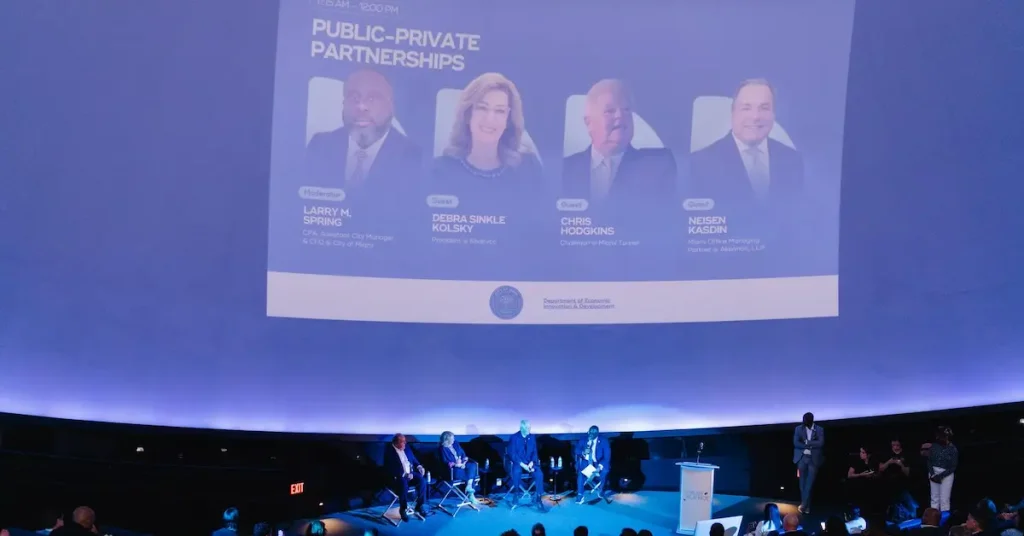
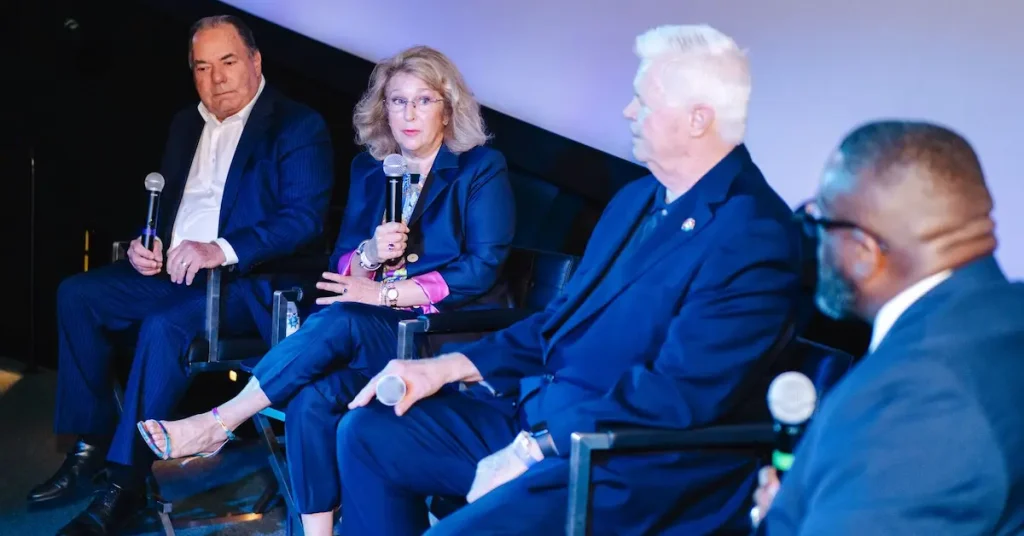
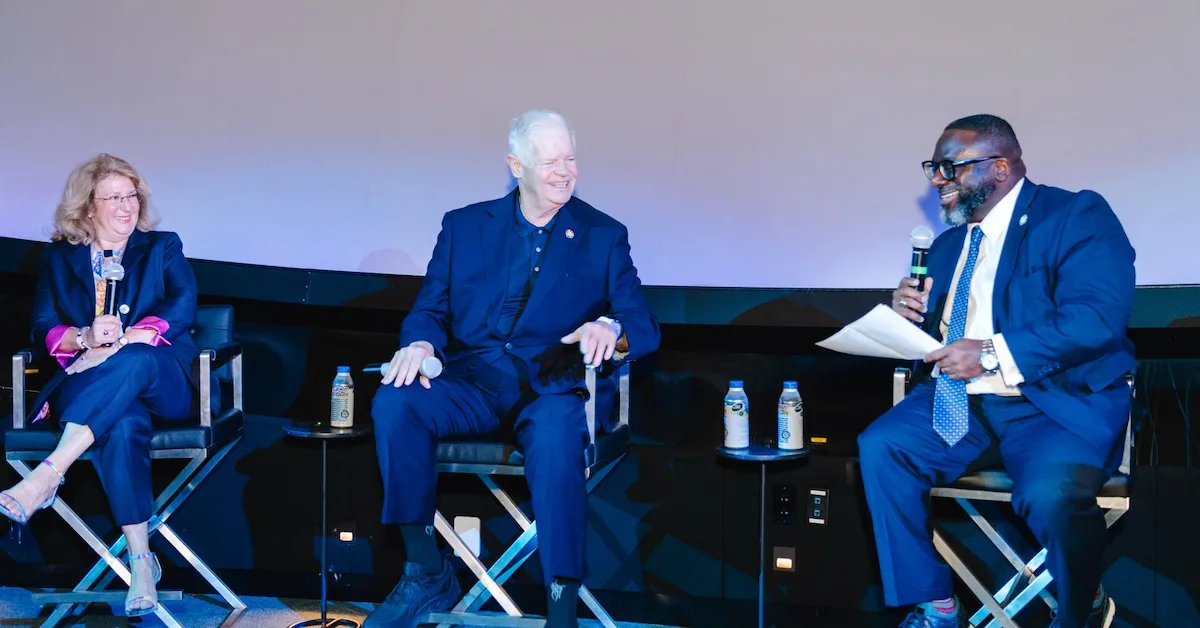
On April 11, 2025, the City of Miami’s Economic Innovation and Development Department held the Opportunity Zone Summit at the Frost Museum of Science. A standout session was the panel discussion titled “Public-Private Partnerships,” moderated by Larry M. Spring, CFO of the City of Miami. The panel featured Debra Sinkle Kolsky, President and Owner of Redevco, a South Florida-based real estate firm; Chris Hodgkins, Chairman of Miami Tunnel, the entity behind the city’s transformative port infrastructure project; and Neisen Kasdin, Co-Managing Partner of Akerman LLP’s Miami office, a leading law firm specializing in urban development. Following a fireside chat between Mayor Francis X. Suarez and HUD Secretary Scott Turner on Opportunity Zones, the panel explored how Public-Private Partnerships can drive impactful projects, drawing from their experiences in retail, infrastructure, and urban redevelopment in Miami.
Spring opened the discussion by noting his contribution to delivering 1,000 of the 15,000 housing units mentioned by the Mayor, emphasizing the importance of Public-Private Partnerships in addressing Miami’s needs.
“Opportunity Zones and Public-Private Partnerships are critical to meeting the needs of the City of Miami, Spring said.”
Miami Local captured key insights and exclusive content from the 2025 Opportunity Zone Summit panel on Public-Private Partnerships, moderated by Larry M. Spring, revealing the critical elements that make these collaborations succeed in addressing urban challenges.
Larry M. Spring:
Very quickly, I would like for you to give a brief introduction to yourself and what you do, starting with Debra.
Debra Sinkle Kolsky, president and owner of Redevco:
“We’ve been around since 1976, doing traditional shopping centers throughout South Florida. Back in the mid-90s, after Hurricane Andrew, I had my first exposure to public-private concepts and ventured into delivering in the urban core, trying to make it work, and have done it successfully. We develop and manage our own concepts.”
Chris Hodgkins, chairman of the Miami Tunnel:
“I started at the Miami Tunnel 15 years ago as vice president of our concession during the groundbreaking. I’ve been a public-private partnership person, focused on making these projects work, especially for transformational infrastructure.“
Neisen Kasdin, co-managing partner of Akerman LLP’s office in Miami:
“We work across a spectrum of projects, but my forte is large-scale urban infill projects, including the Design District, Brickell City Centre, Magic City Innovation District in Little Haiti, Faena District, and recently, the global headquarters for Citadel. I was a city commissioner and mayor of Miami Beach from 1991 to 2001, and chaired the community development corporation for South Beach, working 20 years on its revitalization when it was the poorest neighborhood in Miami-Dade County.”
Larry M. Spring:
Debbie, walk us through the structure of one of your successful retail-focused P3s and what made it work.
Debra Sinkle Kolsky:
“I’ll use my Shops of Liberty City project. It’s eight-and-a-half acres at Northwest 54th Street and 12th Avenue. It was a food desert with no development since the riots 30 years prior. The community had disposable income but spent it elsewhere. We purchased the site, fully leased it with tenants eager to serve the area, and educated the community on self-investment. Challenges included perceived crime and gang issues, but we worked with the police to analyze statistics, finding no significant crime in the immediate area. Liberty City’s just a name, and the Miami Airport’s within that, picking up undue perception. Further north, where Liberty Square was, that’s where crime was concentrated. The city expedited permits, and the police collaborated with us. My lender rejected the deal despite double-digit rents and 100% leasing, citing bias against Liberty City. Another lender stepped in, and Fannie Mae invested to learn from the model. The enterprise zone offered sales tax rebates and a tax freeze. The city permitted the center in three days, enabling tenants to open and generate revenue. Twenty-five years later, it’s 100% leased and ripe for Opportunity Zone redevelopment. I always say the city is moving to us.”
Larry M. Spring:
Chris, the Miami Port Tunnel is a critical piece of infrastructure. What lessons did you learn, and how does risk-sharing contribute to such projects?
Chris Hodgkins:
“The Port of Miami Tunnel took 32 years to plan. Bridges were considered, but a tunnel was chosen due to larger ships. We joined after Babcock and Brown went bankrupt, renegotiating rates during a tough time post-Marlin Stadium fallout. As the cruise capital, the industry opposed another risky public project. We brought in a top contractor, but they struggled with community relations, so we handled that while they focused on construction. Community engagement was key. We launched Operation 305, prioritizing local hiring—spending over $450 million on local vendors, with 7,000 workers, 83% from the 305 area code. We hired by zip code, ensuring a diverse workforce. We finished on time, $90 million under budget, a rarity in Miami. The tunnel accounts for sea level rise with 55-ton gates and has removed 80% of trucks from downtown, improving air quality and walkability. We succeeded due to community support, leadership, and funding from the CRA, county, FDOT, and $250 million from federal TIFIA.”
Larry M. Spring:
Mayor Diaz pushed hard to remove trucks, enabling projects like Miami World Center. Neisen, how can cities use legal and planning tools for equitable P3s?
Neisen Kasdin:
“Deborah pioneered investing in distressed areas. Larry, we worked together on Newtown, a model P3. Incentives have evolved—new TIF districts are rare, but zoning incentives are key with high land and construction costs. The state’s Live Local Act pushes workforce housing, while public assets help lower costs for economic or housing benefits.”
Larry M. Spring:
What’s your take on the Live Local Act?
Neisen Kasdin:
“It’s a huge topic of discussion. The impact of NIMBYism on housing costs is significant. We’re not producing enough housing to meet demand, often due to neighbors opposing density. Live Local responds to this but isn’t a panacea. It struggles with luxury waterfront projects needing affordable units or high-rise parking costs. Miami has 26 applications, but many may not materialize.”
Larry M. Spring:
Some of those are existing affordable housing developments leveraging density and tax credits, similar to CRAs.
Neisen Kasdin:
“In Miami, applications in T-5 zones may struggle, but T-6-8 zones in some neighborhoods might see more success, though not as broadly as expected.”
Larry M. Spring:
Debbie and Chris, what do you seek from public partners to advance P3s?
Debra Sinkle Kolsky:
“Time is money. Expedited permits and approvals are critical. In some cases, the government provides land to a community nonprofit, treating it as an investor. At Shops of Liberty City, fast permitting was decisive—retailers need timely openings to avoid penalties. Government needs to understand we’re creating tax revenues for reinvestment. We’re not the big, bad wolf. Every property has a purpose, and community engagement ensures support.”
Chris Hodgkins:
“For infrastructure, we need community initiative and leadership support. The tunnel succeeded with backing from the mayor, port, CRA with $50 million, county with $450 million, FDOT, and $250 million from federal TIFIA funding.”
Neisen Kasdin:
“Leadership is essential. Midtown Miami turned a 55-acre rail yard into a thriving area in one year with a new land use plan, zoning, CRA, and CDD, driven by city commitment.”
Larry M. Spring:
That project’s tax base started at $25 million. Including the Design District and Wynwood, it’s now over a billion dollars. When you come together, it works, and there’s plenty of money to be made.
Mayor Suarez & HUD Secretary Turner on the Power of Opportunity Zones
The panel on Public-Private Partnerships at the 2025 Opportunity Zone Summit highlighted the tangible impact of collaborative efforts in Miami’s urban development. Debra Sinkle Kolsky detailed how the Shops of Liberty City turned a food desert into a thriving retail hub, fully leased for 25 years, by expediting permits and partnering with local authorities to address safety concerns. Chris Hodgkins explained how the Miami Port Tunnel removed 80% of downtown truck traffic, supported by $450 million in local vendor spending and $250 million from federal TIFIA loans, emphasizing community initiative and leadership. Neisen Kasdin pointed to Midtown Miami’s billion-dollar tax base growth as a testament to effective leadership, alongside the evolving use of zoning incentives like the Live Local Act to address housing needs. Their discussion illustrated how Public-Private Partnerships, when grounded in shared commitment, can deliver sustainable growth and revitalization, providing a model for cities nationwide.