Miami, FL – September 3, 2025 — The City of Miami’s Economic Innovation &...





Miami, FL – September 3, 2025 — The City of Miami’s Economic Innovation &...

On May 28, 2025, the City of Miami and citizenM hosted a Tech Mixer. It was...

On May 7, 2025, the Opportunity Zones Policy Summit convened at the National...
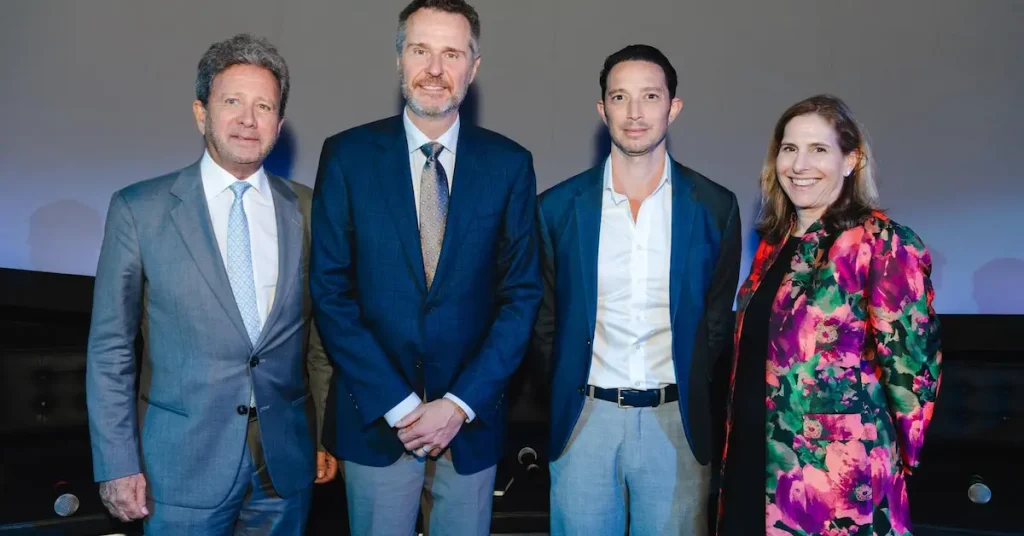
On April 11, 2025, the City of Miami’s Department of Economic Innovation and Development hosted the Opportunity Zone Summit at the Frost Museum of Science. A key panel, “Unlocking Capital,” moderated by Sheri Thompson, Executive Vice President and Head of Affordable Housing Activities at Walker & Dunlop, featured Neil Fairman, Chairman of Plaza Equity Group; Keith Melton, Senior Managing Director at Walker & Dunlop (standing in for Alex Jugant of Bridge Investment Group, whose flight was delayed); and Michael Van Der Poel, Founder of Acre. They explored strategies for unlocking capital to address housing supply challenges, enhance investment through mechanisms like the step-up basis, and shape the future of Opportunity Zone 2.0 for community revitalization.
Sheri Thompson opened the session by introducing herself, sharing key Opportunity Zone statistics, and explaining the panel’s focus on unlocking capital.
Sheri Thompson
“I’m Sheri Thompson, the executive vice president and head of the affordable housing activities at Walker & Dunlop. We’re a financial intermediary, and I’ll be moderating this panel. I wanted to start with a couple of fun facts about opportunities we’ll discuss. Alex Jugant from Bridge Investments couldn’t be here due to a delayed flight, so I’ll incorporate some of his thoughts.”
“By 2022, Qualified Opportunity Zone funds held $89 billion in OZ projects, attracting a broad mix of investors. Over 5,600 OZ tracts nationally have received investments, almost five times the investments in new market housing tax credits. Tracts designated as OZs are 20% more likely to experience development activity than non-designated areas. Through 2024, 77% of all OZ investments were for residential use, driving housing growth through Opportunity Zone investments. We’ll talk about what’s working, ideas for Opportunity Zone 2.0, and our experts’ thoughts on unlocking capital from financing and development perspectives.”
The panelists then introduced themselves and shared their experiences in unlocking capital for various projects.
Neil Fairman
“I am the chairman of the Plaza Equity Group. I moved to Miami 35 years ago. I started developing in transitional areas, doing shopping centers, then built multifamily and high-end condominiums on the ocean and intercoastal. Most recently, I’ve become the magic partner for the Magic City Innovation District.“
Keith Melton
“My name’s Keith Melton. I’m a senior managing director with Walker & Dunlop, running our Nashville, Tennessee office. My emphasis is on new construction and sub-rehab multifamily. I’ve had the opportunity to do $3 billion in HUD 221-D4 new construction programs. Since Opportunity Zone 1.0 was announced in 2015, we’ve done about a half billion in HUD 221-D4s, comprising 17 assets. We’ve seen this program come to life in many areas, and we’re here to talk about those projects.”
Sheri Thompson
“A huge thank you to Keith, who’s standing in today with no prep because Alex couldn’t be here. Keith has tremendous knowledge on this.”
Michael Van Der Poel
“I’m Michael Van Der Poel, founder of Acre, a real estate investment fund manager focused on residential housing strategies. Since 2011, we’ve invested in 40,000 apartments across debt and equity strategies. We have an equity franchise as an owner-operator and developer of housing across the country and globally, and a lending platform as a construction and bridge lender to other owner-operators. I’m a four-year resident of Miami. We’ve invested in projects in Miami, working closely with Commissioner King on some, including a project in Little River, an Opportunity Zone I can discuss. Out of our projects, 1,000 to 1,500 units developed in the last five years have been Opportunity Zones. We have an investor base set up to fund Opportunity Zones, and I’m happy to be here.”
Sheri Thompson invited Michael Van Der Poel to discuss one of Acre’s Opportunity Zone projects, then asked about investment strategies, focusing on unlocking capital.
Sheri Thompson
“Michael, can you give a quick overview of one of your projects?”
Michael Van Der Poel
“Our projects are on the edge of transitioning areas, building ground-up new development of multifamily housing, providing market-rate and naturally affordable workforce housing. Most are medium-density to mid-rise. Our project in Little River is 200 units, where we’re the lender. It will add to the investment in a thriving neighborhood going through positive change. We’re excited to break ground in Little River in the next couple of months. Most projects are new build, amenitized multifamily, catering to aspiring homeowners and up-and-coming young professionals.”
Sheri Thompson
“Michael, are you targeting individual projects within a zone or looking at a zone overall for investment?”
Michael Van Der Poel
“We’ve invested sporadically on a deal-by-deal basis, not as an overall zone. It’s been interesting looking at maps nationally to see where zones were placed and where they can expand. Some were perfectly placed, while others were interestingly placed across the country. There’s a lot of research behind that.”
Sheri Thompson
“I asked that because Alex from Bridge Investments, who couldn’t be here, said their original intent was to invest in entire OZ tracts, but it took too long and was too hard, not attracting investors that way. They’ve shifted to picking individual projects within a zone to start revitalization, similar to what you’re doing.”
Sheri Thompson then highlighted Indy Tower, a project Keith Melton worked on, and asked for details.
“Keith, we’ve talked a lot about Indy Tower today, financed by Belmont Finance. It’s the first 100% affordable and workforce housing high-rise in the country, not just Miami, as developer Ron corrected me. Can you talk about how the OZ came into that and how the capital stack made the project work?”
Keith Melton
“Indy’s a great microcosm of what we’ve seen with Opportunity Zones since 2018. It’s 250 units, 28 stories, a couple of blocks from here in the Miami Arts District. 100% of the units are below 140% of AMI, with designated units at 60, 80, 100, 120, and 50% at 140, all below market. The housing development new construction program created max leverage for the team, coupled with CRA dollars, tax abatements, and city benefits like discounts on impact fees, forming the bulk of the equity stack. The project has been wildly successful, the first high-rise 100% affordable without low-income housing tax credits. It’s seven months from final CO, leasing at 30 units a month. All units at 120 and below are full, and the balance will lease up soon. Most residents are police officers, nurses, teachers, firemen, and district attorney staff who couldn’t afford to live here otherwise. We’re proud that the second phase, currently in design, will also be affordable, meeting the same mission.”
Sheri Thompson then turned to Neil Fairman to discuss the Magic City Innovation District.
Sheri Thompson
“Neil, could you tell us about what you have planned, how you’re bringing in OZ Zones, and how the project’s coming to fruition?”
Neil Fairman
“We’re getting ready to start a 349-unit residential tower, which is eligible for Opportunity Zone funding. I’d like to explain how a developer thinks about this. Plaza was finishing a 470-unit condominium on the intercoastal with a 112-slip marina when I got a call from a friend who started Cirque du Soleil. He was looking at a property in Little Haiti and asked me to take a look. I’d probably driven through Little Haiti twice in my life but saw the potential. It had an I-95 exit, proximity to Biscayne Boulevard, and community assets like the Little Haiti Soccer Park and Cultural Center. I said, this is a developer’s dream, and started thinking about what we could do. There was potential for a railway stop on the new northeast corridor, so I saw phenomenal potential. But the community was sensitive to us coming in, worried about gentrification. I decided to get involved if I could get the community on our side, holding over 100 meetings to explain the benefits. Initially, we planned 25% affordable and workforce housing, but Commissioner Keon Hardiman said the community needed people to stay. He wanted something different, helping residents afford to live there. We created a $31 million program, leveraged the city for impact fees totaling $40 million, and pre-funded it, establishing the Little Haiti Revitalization Trust, the first big trust of its kind in the city. We didn’t have a CRA or government funding, so we were at a disadvantage, but we wanted the community to feel we were there for the long term. We started buying property in 2014, accumulating 20 acres, selling off some on Northeast 2nd Street to avoid competing with local merchants. The property was an abandoned trailer park and 20 warehouses used for storage, with hardly anyone working there. They were dilapidated, so we spent $15 million upgrading them to improve the area. We went to the city commission to approve a special area plan for 8 25-story residential buildings with 2,620 units, six office buildings for innovative uses, accelerators, incubators, and educational purposes. We weren’t eligible for Opportunity Zone funding because our properties were bought before the program started, which we’ll discuss later as something to change.”
Sheri Thompson shifted the conversation to capital attraction and Opportunity Zone 2.0 strategies, asking the panelists for their insights and approach to unlocking capital.
Sheri Thompson
“OZs have attracted a lot of capital, but institutional capital is still light compared to private capital. As of December 31, 2024, between $40 and $120 billion of capital was raised for OZ zones, though it’s self-reported. Compare that to $12 trillion of equity raised by institutional capital for commercial real estate in the same period. Capital is scarce for developers and lenders, with global fundraising slowed. How can developers better tap into OZ from private investors, Michael? And as a private investor of institutional money, how do you see more people accessing that?”
Michael Van Der Poel
“It’s difficult to get development started today, affordable or not, Opportunity Zone or not. We’re seeing the slowest housing starts since the global financial crisis. Even with significant supply being delivered, it’s absorbed quickly. The housing supply challenges of 2.9 to 4 million homes nationally is catching up, projected at 7 million by 2027, especially with rent growth kicking back in 2027-2028. This is compounded by volatility from geopolitics, tariffs impacting inflation in materials, construction, and labor, and policies creating hurdles. High treasuries and interest rates add to the challenge, making development tough for the last three years and likely into the medium term. We’re seeing a bottleneck in housing deliveries, pronounced in Miami. Supply is the solution. Working with cities to fast-track permitting can help. Opportunity Zones provide a unique solution, offering long-term investment into areas not typically on investors’ radars. We should discuss changes for 2.0, as it’s a meaningful element in a market where traditional development doesn’t make sense. It’s a unique ingredient to greenlight development.”
Sheri Thompson
“Are you focusing on shovel-ready projects in OZ zones, or are you willing to take on deals that still need entitlement?”
Michael Van Der Poel
“Mainly shovel-ready, but we do have pre-development capital as well.”
Sheri Thompson
“Alex from Bridge Investments noted that shovel-ready projects are more viable for institutional investors due to risk, time, and cost.”
Sheri Thompson then opened the discussion to fiscal policies and Opportunity Zone 2.0 ideas.
“Michael mentioned fiscal policies. How do you see those affecting OZs, and for Opportunity Zone 2.0, what would move the needle for you to invest, lend, or develop?”
Keith Melton
“The benefit we saw in projects came in the first three or four years after Opportunity Zones started, around the step-up basis for capital gains—15% for two years, then 10%. In 2.0, we need to reset the step-up basis for investors. Back then, cap rates were more compressed, with more capital gains being created and rolled into new OZ projects. In today’s increased cap rate environment, we won’t see as many capital gains as between 2019 and 2022. Additionally, allowing after-tax dollars to get the same benefit as capital gains in Opportunity Zone funds would be helpful in creating more capital for 2.0.”
Neil Fairman
“Miami has absorbed 16,000 units last year and 13,000 this year. For 2027, only 3,400 units are slated, requiring groundwork now, showing a capital constraint. Debt, preferred equity, and mezzanine are available, but equity markets haven’t raised capital for multifamily. Investors expected a bank problem with rising interest rates, anticipating foreclosed assets at a discount, so money went into distress, not new construction. Funds are just starting to raise money, but it’s not available now. It’s nearly impossible to find equity for high-rise projects because they don’t pencil with 4% to 4.5% 10-year treasuries, rising construction costs, and recent tariff talks creating uncertainty. We’re heading into a housing supply challenges, and Opportunity Zones could help. We couldn’t use OZ funding initially because we owned the property before the program started. This needs to change so properties can be valued at 2018 levels, paying capital gains from there up, allowing existing owners to use OZ rather than requiring new investors. Also, there’s no sense in limiting OZ to capital gains; if someone’s paid taxes, they should be able to use regular dollars and take the 10-year hold benefit.”
Sheri Thompson concluded by asking for one key change to spur Opportunity Zone development and further unlock capital.
Sheri Thompson
“If you had a magic wand, what one change would spur development and capital into OZs?”
Michael Van Der Poel
“We do acquisitions and fix properties. Currently, OZ requires about 50% of capital in buildings and development. Changing that ratio to allow significant investment in existing stock for revitalization and recapitalization would address naturally affordable workforce housing in OZ funds.”
The “Unlocking Capital” panel at the 2025 Opportunity Zone Summit delivered critical insights into revitalizing communities through Opportunity Zones. Sheri Thompson highlighted the program’s growth, with $89 billion invested by 2022, largely in housing. Neil Fairman shared how the Magic City Innovation District navigated community concerns, creating the Little Haiti Revitalization Trust to ensure long-term benefits. Keith Melton showcased Indy Tower’s success as a 100% affordable high-rise, emphasizing the role of step-up basis in attracting capital. Michael Van Der Poel stressed the need for shovel-ready projects and flexibility in OZ investments to address housing supply challenges. Their discussion underscored the potential of unlocking capital through innovative strategies, shaping Opportunity Zone 2.0 for sustainable growth.