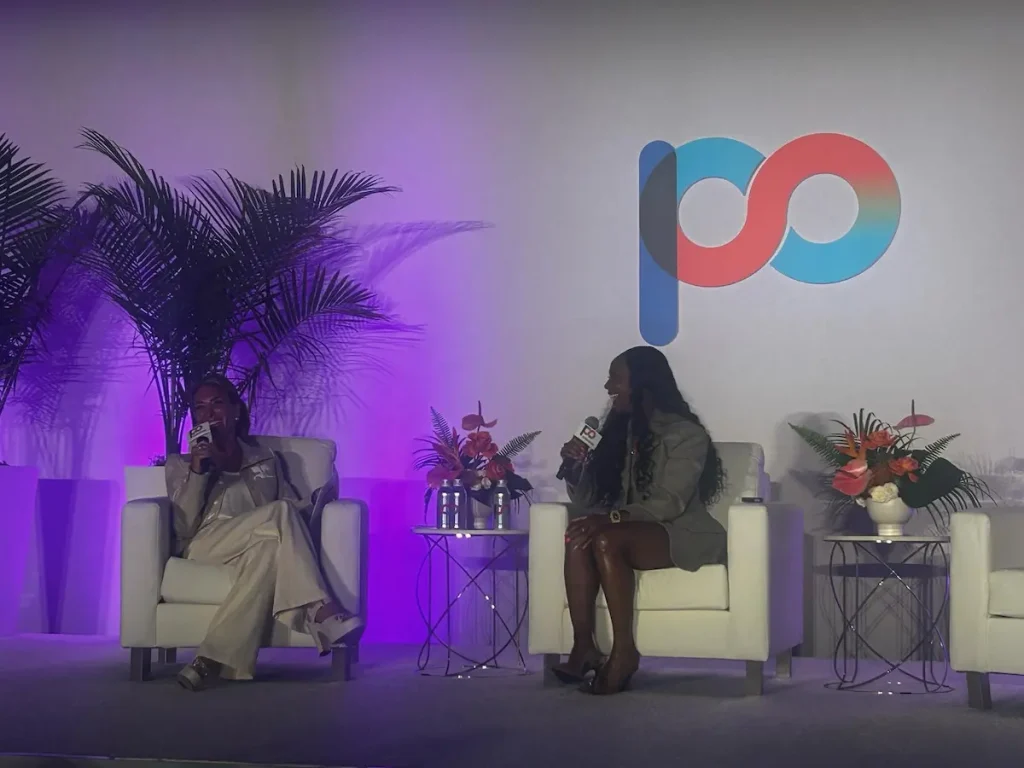
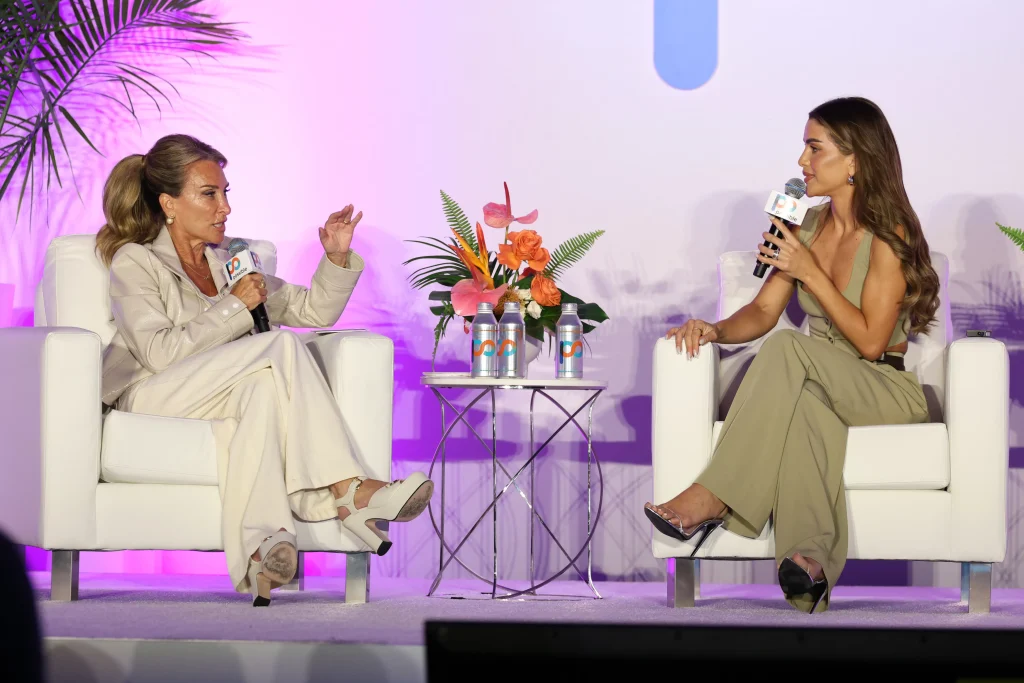
Miami, FL – September 3, 2025 — The City of Miami’s Economic Innovation &...




Miami, FL – September 3, 2025 — The City of Miami’s Economic Innovation &...

On May 28, 2025, the City of Miami and citizenM hosted a Tech Mixer. It was...

On May 7, 2025, the Opportunity Zones Policy Summit convened at the National...
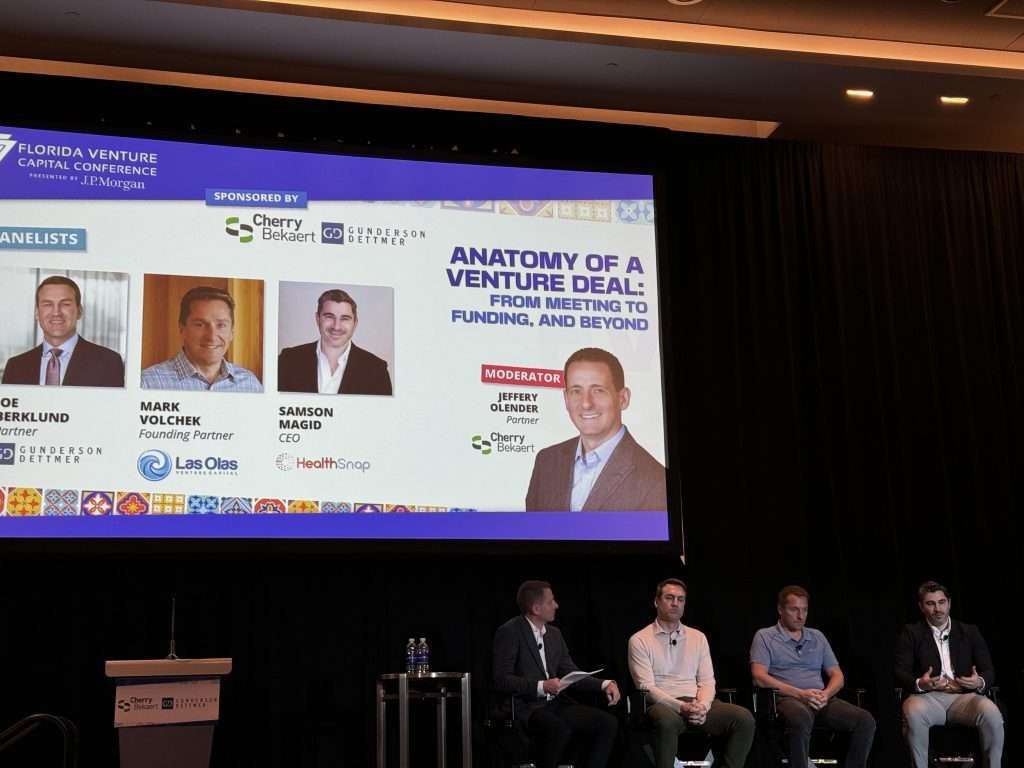
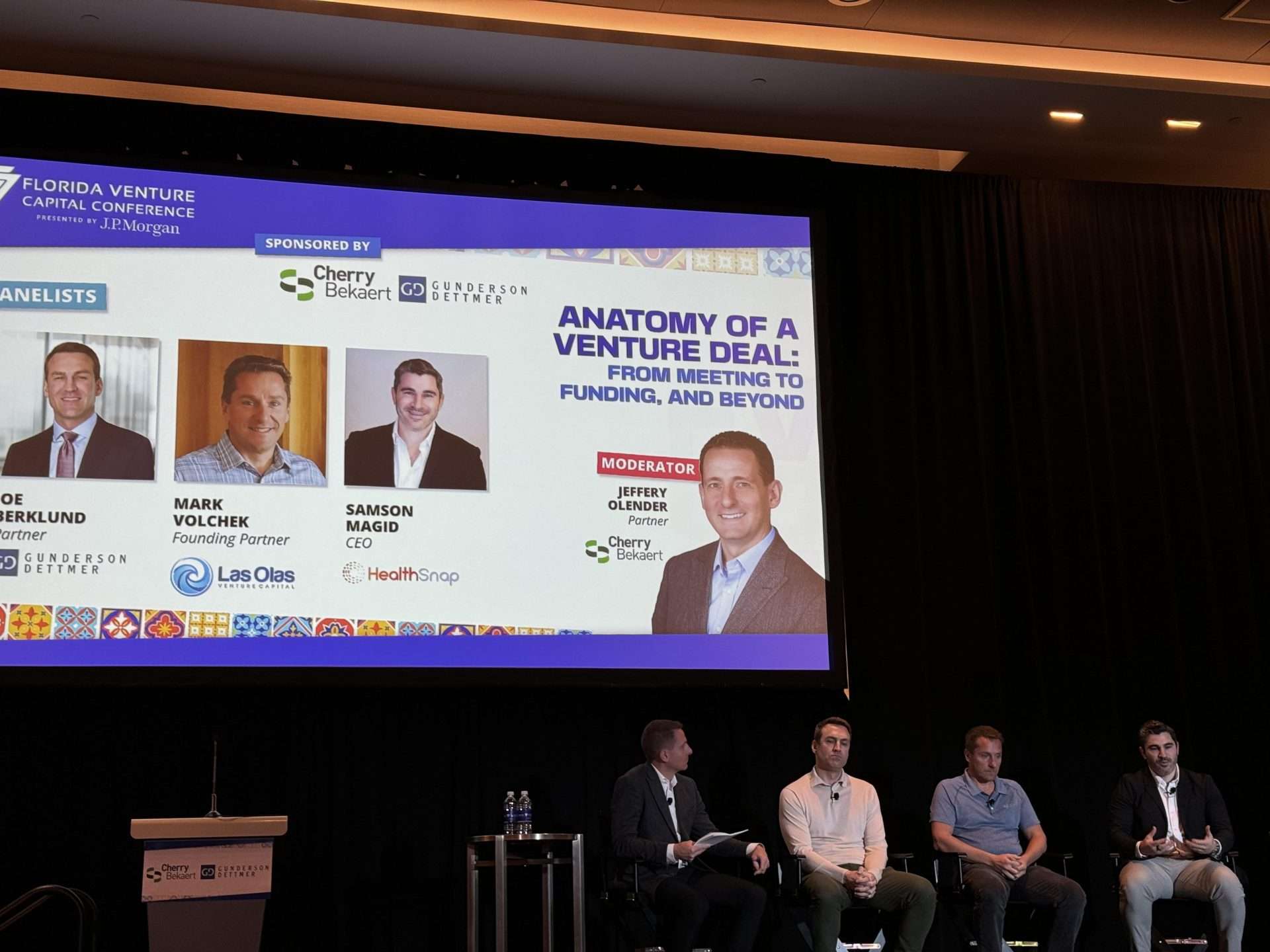
Venture deals ignite the startup world, linking bold founders with funds and support to grow. On March 4, 2025, the Florida Venture Capital Conference hosted a panel to explore a successful venture deal. Led by Jeff Olender, Partner at Cherry Bekaert, this discussion featured Samson Magid, CEO of HealthSnap, Mark Volchek, Founding Partner at Las Olas VC, and Joe Berklund, Partner at Gunderson Dettmer. They offered practical advice on finding deals, building connections, screening fits, and forming strong teams, delivering a clear guide for founders and investors in the venture capital space.
As CEO of HealthSnap, Samson Magid prioritizes proving a startup’s value before seeking venture capital. His insights begin with a warning:
“Most founders when they start a business, the default is to go and raise capital to start the business and I think that’s a really big mistake. You have to validate that you have a real problem. You have to validate that one, you have a reproducible solution to that problem. That you have established product market fit in some meaningful scale, especially when you start, and that you’ve been able to demonstrate traction without ideally putting a dollar into the business by showing that you can be scrappy and validate your idea.”
HealthSnap tested its remote monitoring and crime prevention solutions with 3,000 participants as a research initiative before launching, building early trust.
Magid also champions networking as an ongoing effort. He explains his approach:
“From our perspective, I think my mindset is always be raising, just like always be selling. Whether you’re actively raising capital for a specific round or not, I am 100% of the time making sure that I’m top of mind.”
Attending events like Venture Atlanta keeps him visible. To ensure alignment, he introduced reverse diligence, using the “beer test” and crisis checks:
“Early on, I talked a little bit about like power dynamics and like raising capital. And the reverse diligence is a thing that most founders don’t talk about enough. For me, it’s do they pass the beer test? Do I wanna spend time with this person?”
Magid demands results upfront. His perspective highlights competition:
“In reality, there’s 5,000 other people that are doing the same thing as you. And I think you have to be able to say, why you? Why now? Why your solution? And show me, not tell me that you’ve been able to show traction.”
HealthSnap’s pre-launch success established a solid base for investment.
For Magid, networking fosters lasting ties. He recalls early efforts:
“We were at this conference in twenty sixteen, seventeen when we maybe didn’t have a product with no revenue. I’ve been to Venture Atlanta a couple of times… And if you go back to them two or three years from then, and you say, oh hey, I told you this and we’re at this, and we’re way beyond what we told you.”
Through reverse diligence, he asks practical questions like, “What fund are you on?” to avoid wasted time.
Mark Volchek, Founding Partner at Las Olas VC, outlines a clear method for finding and selecting venture deals. He advises founders to connect with 10-20 top investors early, leveraging events like the Florida Venture Forum. His view is clear:
“It’s really really important. I mean as you guys all know, being at this conference is getting to know people, meet people, ideally long before you’re in the market to raise the capital.”
Warm introductions from trusted contacts speed up trust, as he notes:
“So, for us, if we meet somebody and track them for a while, it makes it much easier to then pull the trigger and make an investment six months or twelve months later.”
Las Olas VC reviews thousands of options yearly, targeting startups with $250K-$1.5M in revenue, 2-3x growth, and East Coast roots. Team fit matters—Volchek assesses unity at casual dinners, flagging high turnover. For 2025, economic shifts offer opportunities:
“We chose that company last week that was out, know they started raising mid January, and they got 10 term sheets as of last week, for their series B.”
Volchek sees networking as the foundation. He suggests:
“Find sort of the 10 or 20 ideal investors for your business, and then make it a point to get to know them in advance of needing to raise capital.”
Trusted introductions add value, per his advice:
“Get somebody that’s close to your business… to make an introduction.”
Screening relies on data, but Volchek also prioritizes teams. He explains:
“At first we screen really against basic criteria. So things that we don’t really even need to meet the entrepreneurs or do anything. It’s sort of, are they at the right stage? So what’s their revenue? So for us that’s sort of between 250,000 and maybe 1,500,000. Are they growing fast enough? So we’re really looking for high growth, so that’s two or three x.”
Team stability is critical, as he notes:
“For us it’s often founders who have some asymmetrical knowledge, so we really want them to be experts in something. But I think where I’ve seen things go wrong, it’s often founders who can’t build a team around themselves, they’re to me the most frustrating.”
Joe Berklund, Partner at Gunderson Dettmer, enhances venture deals with practical legal guidance, emphasizing startups’ need to invest in legal counsel. He stresses that startups should grasp legal basics before valuation and hire lawyers for due diligence. He explains the role of lawyers in building trust:
“This is going to dovetail on what Mark was just talking about but it’s really, really important to approach investors the right way if you’re coming from a company perspective and so having people in your network whether that’s your lawyer, your lawyer really should be able to introduce you to several investors.”
Berklund compares investor-founder ties to marriages, urging mutual checks:
“The average fund company relationship lasts longer than the average marriage. Diligence runs both ways. Make sure that you understand what the investor brings to the table.”
For 2025, he observes strong deal activity:
“What I’m seeing, I’m seeing a lot of venture deals right now. I think we’re gonna close probably six or seven venture deals in the next, I don’t know, two weeks.”
Berklund highlights legal help’s value in building trust. His advice underscores long-term alignment:
“I’d also add that, you know, the average fund company relationship lasts longer than the average marriage.”
Like Volchek, Berklund values “athlete” leaders. He shares:
“People are what I think is probably the number one factor that most funds are looking at when they’re evaluating investments. I always use the term athletes, so people who are good at everything.”
Top startups see strong interest, with seven to eight offers.
The panel’s advice hinges on preparation and connections. Magid’s focus on proof sets the stage, Volchek’s screening adds investor insight, and Berklund’s legal support completes the process. Networking binds these steps, fostering trust and fit, while strong teams drive success.
On March 4, 2025, the Florida Venture Capital Conference delivered a clear guide for venture deals. Jeff Olender, Samson Magid, Mark Volchek, and Joe Berklund offered tips on proving ideas, making smart investments, securing legal help, and building great teams. Their insights demonstrate that venture capital thrives with preparation, people, and partnerships.